

A national approach to energy poverty: Understanding the new Senate bill

Emilie Grenier
Campaign Manager
October 6, 2026
Blogs | Energy Poverty posts | News
-
Nearly 2 million Canadian households experience energy poverty.
- A national framework would connect existing work and provide better data, goals, and accountability measures.
-
Addressing energy poverty is essential to ensuring people can live, work and participate in their communities.
One in seven Canadian households has reduced or stopped purchasing basic necessities, including food or medicine, to pay an energy bill. Energy poverty can mean keeping the thermostat uncomfortably low because heating costs are too high. It can mean living in a home that can’t retain heat in winter, can’t dump heat in the summer, or constantly harbours dampness and mold.
Energy poverty initiatives exist across Canada — but we don’t have a shared national framework to answer some important questions:
- How should we measure energy poverty?
- What progress are we making to solve it?
- And how do we ensure that policies in different parts of government are working toward the same goal?
How we measure a problem shapes how we understand it and how we direct resources and attention to address it.
A new Senate bill aims to address this. Introduced on Oct. 1 by Senator Mary Coyle, Bill S-251 proposes the creation of the first national framework to address energy poverty.
“Bill S-251 makes lasting energy affordability a national priority. Every reduction in energy poverty is a person with more room in their household budget, less stress, better health, a safer home, and improved opportunities to participate in and contribute to their community and to Canada’s economy,” Coyle said at the Canada Home Energy Justice Conference on Oct. 6.
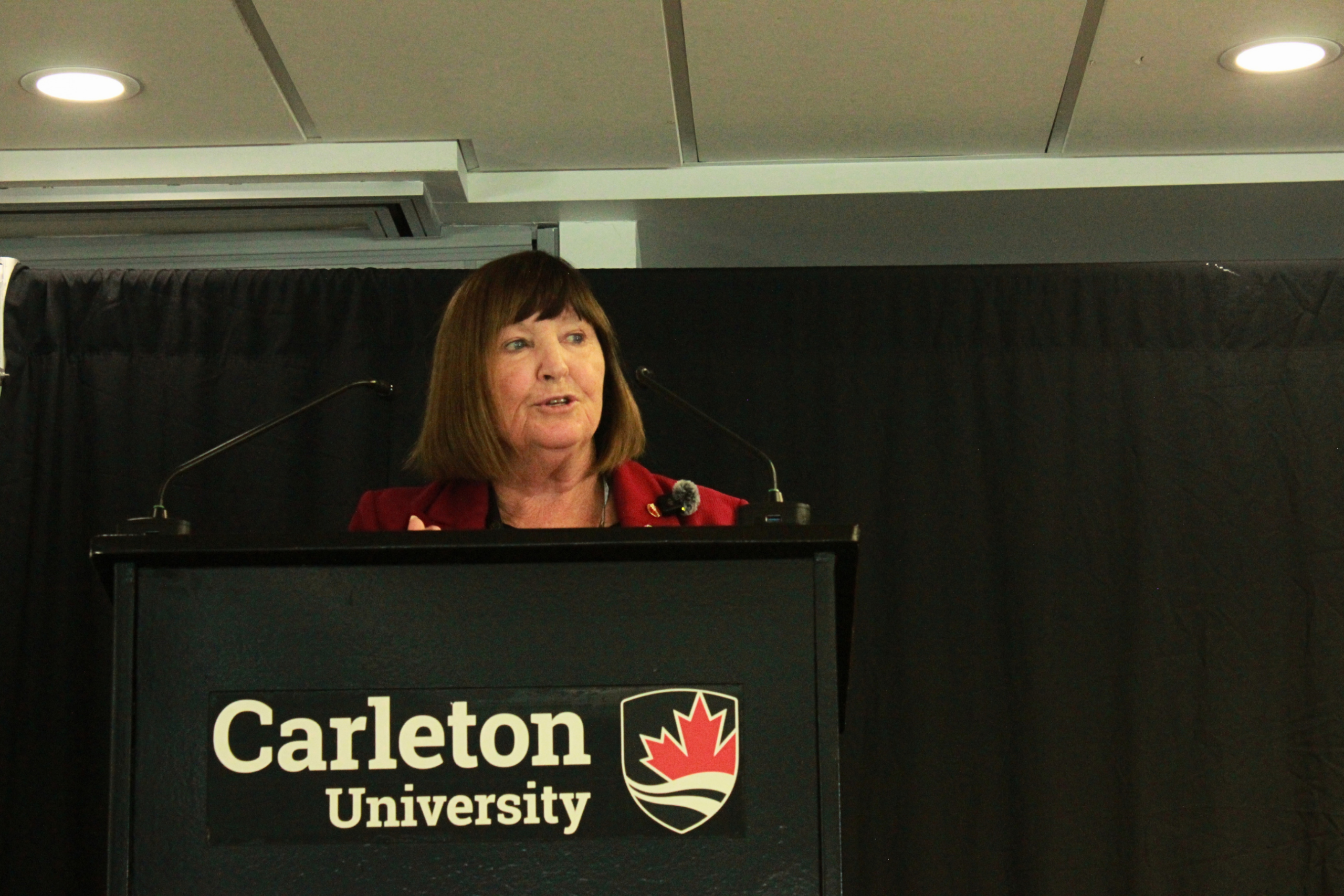
The Act would require the federal government to establish national metrics that consider not just energy affordability, but also housing energy performance, health, economic participation, and well-being. It would also require setting targets, regular evaluation, and public reporting.
The national strategy proposed in the bill would require the government to examine the impacts of energy poverty on household financial security, productivity, labour-force participation, local economic activity, and Canada’s broader economic resilience and prosperity. Improving the energy performance and condition of Canadian households is an investment in people’s ability to live, work, and participate in their communities. No single threshold captures the full reality of energy poverty; a national framework should give us the ability to measure the problem from multiple angles, and improve how we measure it over time.
For the federal government, that means energy poverty can’t sit neatly within a single policy file or ministerial mandate letter. Energy poverty and its solutions impact housing, affordability, health, energy, climate, economic development, and workforce participation.
A national strategy should ultimately be judged by whether it improves people’s lives; not simply by whether a strategy document exists. The bill would require the national strategy to be tabled in Parliament within two years of Royal Assent, followed by regular reports on its implementation and efficacy. It would also establish an advisory council bringing together governments, Indigenous representatives, experts from the housing and utility sectors, and people with lived experience of energy poverty.
Canada already has people and organizations trying to solve energy poverty in communities across the country. A national framework would connect that work to provide a definition, better data, measurable goals, and a way to hold governments accountable to progress. We now need Senators and Members of Parliament from across the country and party lines to support this legislation and help move it through Parliament.
Expand the Canada Greener Homes Affordability Program
Who it helps: Low- and median-income households that cannot take on more debt.
What it does: Provides no-cost, direct-install energy-saving upgrades.
Why it matters: Helps lower energy bills and improve homes without additional debt.
How it helps reach the next million homes: Makes sure households facing the greatest affordability barriers benefit from energy-saving retrofits.
Create a National Home Energy Performance Fund
Who it helps: Households and buildings that can invest in upgrades but face upfront cost and implementation barriers.
What it does: Uses low-cost, patient federal capital to support a range of financing and retrofit delivery platforms.
Why it matters: Makes financing available when households are making retrofit decisions (i.e. when equipment fails) and through options that fit different needs.
How it helps reach the next million homes: Helps households access better financing and retrofit services while building business models that attract sustained investment.
Re-fund DRAI and GNPP and transition them to mission-based teams
Who it helps: Owners who need an easier-to-navigate retrofit system that operates at much greater scale.
What it does: Helps modernize and scale retrofit delivery to upgrade more Canadian homes faster and at lower cost.
Why it matters: Streamlines and improves the retrofit process, increases productivity and delivers better retrofits at greater scale.
How it helps reach the next million homes: Builds the delivery systems needed to retrofit the next million homes faster and at lower cost.